
From Gap to Value
Six areas. Six stages. One objective: measurable value.
Find the gap. Close the gap. Create value.
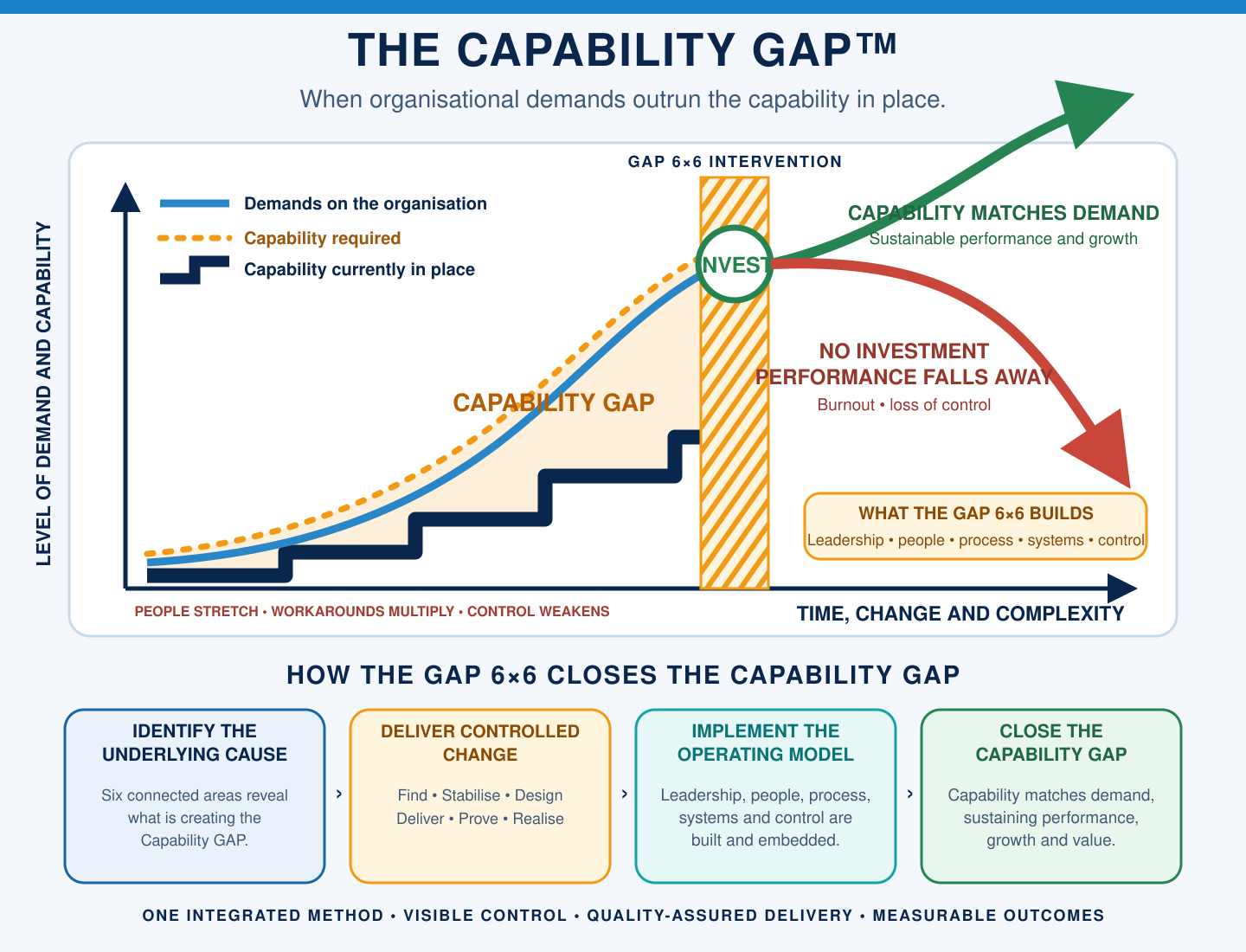

The bridge between today’s reality and tomorrow’s value
The Capability GAP™ opens when the demands on an organisation exceed the capability in place. Growth, underinvestment, weak processes or systems, organisational limitations and external change can all be causes. GAP 6×6 identifies why the gap exists and provides the controlled route through implementation to sustainable performance, growth and value.

GAP Diagnostic™ — turn complexity into priorities
The diagnostic creates a clear, independent view of where value is being lost, where risk is concentrated and which actions matter most.
- Strategy & Value
- Customer & Growth
- Finance & Performance
- Process & Operations
- Technology, Data & AI
- People & Governance
1. Find — Understand the truth
Establish the evidence, expose the material gaps and separate symptoms from root causes. Create one shared view of current performance, risk and unrealised value.


2. Stabilise — Protect today
Restore control, visibility and delivery confidence. Protect cash, customers, reporting and critical operations so the organisation can change from a stable base.
3. Design — Create the future
Translate ambition into a practical future state: operating model, processes, systems, governance, capability and a value case that leaders can own.


4. Deliver — Execute change
Mobilise the right people, decisions and delivery cadence. Manage dependencies, risks and benefits with clear ownership and visible progress.
5. Prove — Evidence before optimism
Test whether the change works in practice. Use evidence, controls and independent challenge to confirm outcomes before declaring success.


6. Realise — Prove the value
Embed the new capability, measure the benefits and make value sustainable. The destination is not activity completed—it is stronger performance and demonstrable value.
Ready to solve your Capability GAP?
Start with an independent GAP Diagnostic™ to identify why organisational demands are exceeding capability and define the clearest route to measurable value.